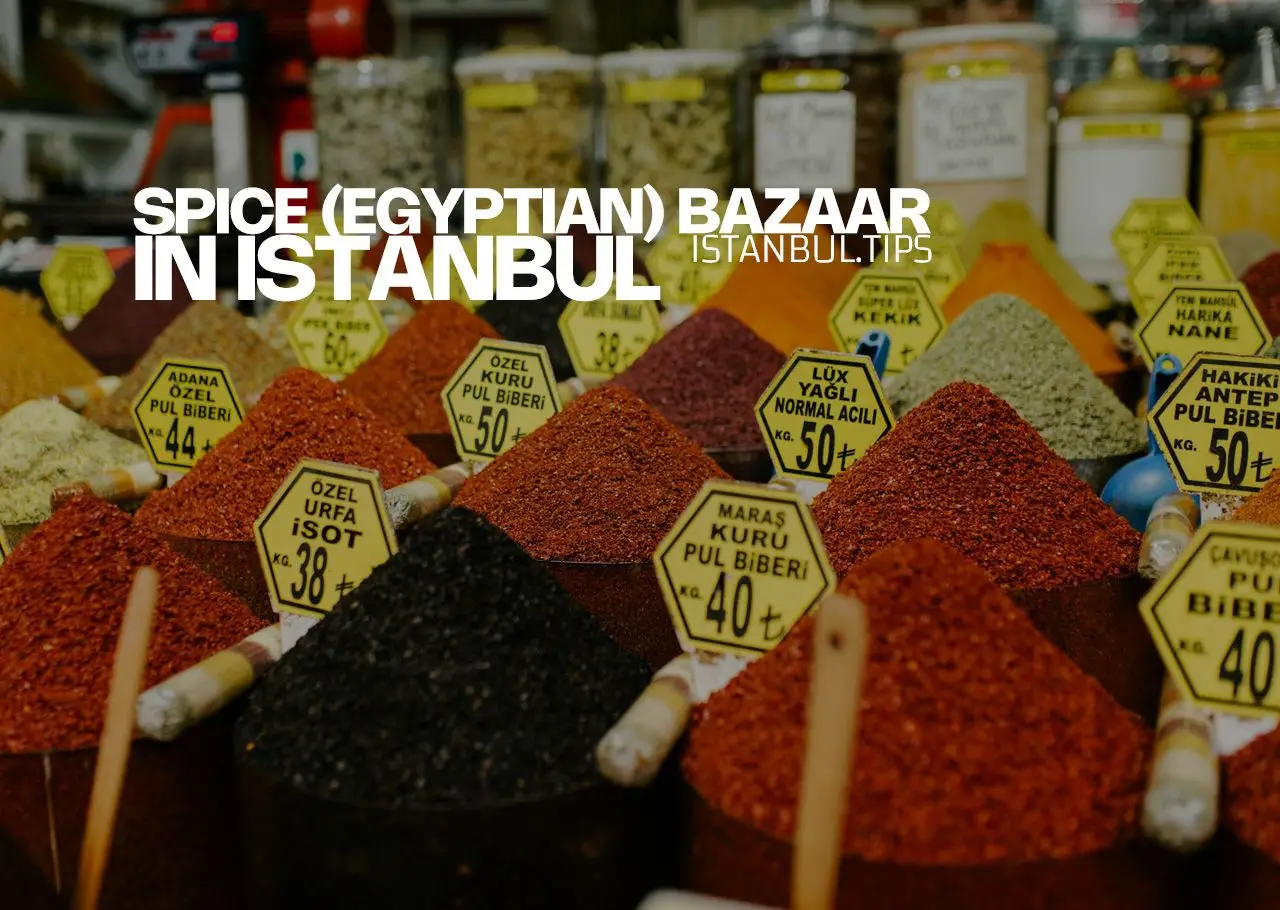
Spice (Egyptian) Bazaar: What to Buy & Hours | Istanbul 2025
Pay Once and Have Free Attractions Entry for 7 days
The Spice Bazaar (Mısır Çarşısı), also known as the Egyptian Bazaar, is one of Istanbul’s most famous marketplaces, dating back to the 17th century. Constructed in the 1660s as part of the New Mosque complex, it originally aimed to fund the upkeep of the mosque and its associated charitable services, including a school, hammam (Turkish bath), and hospital. The bazaar’s name stems from its association with taxes levied on goods imported from Egypt.
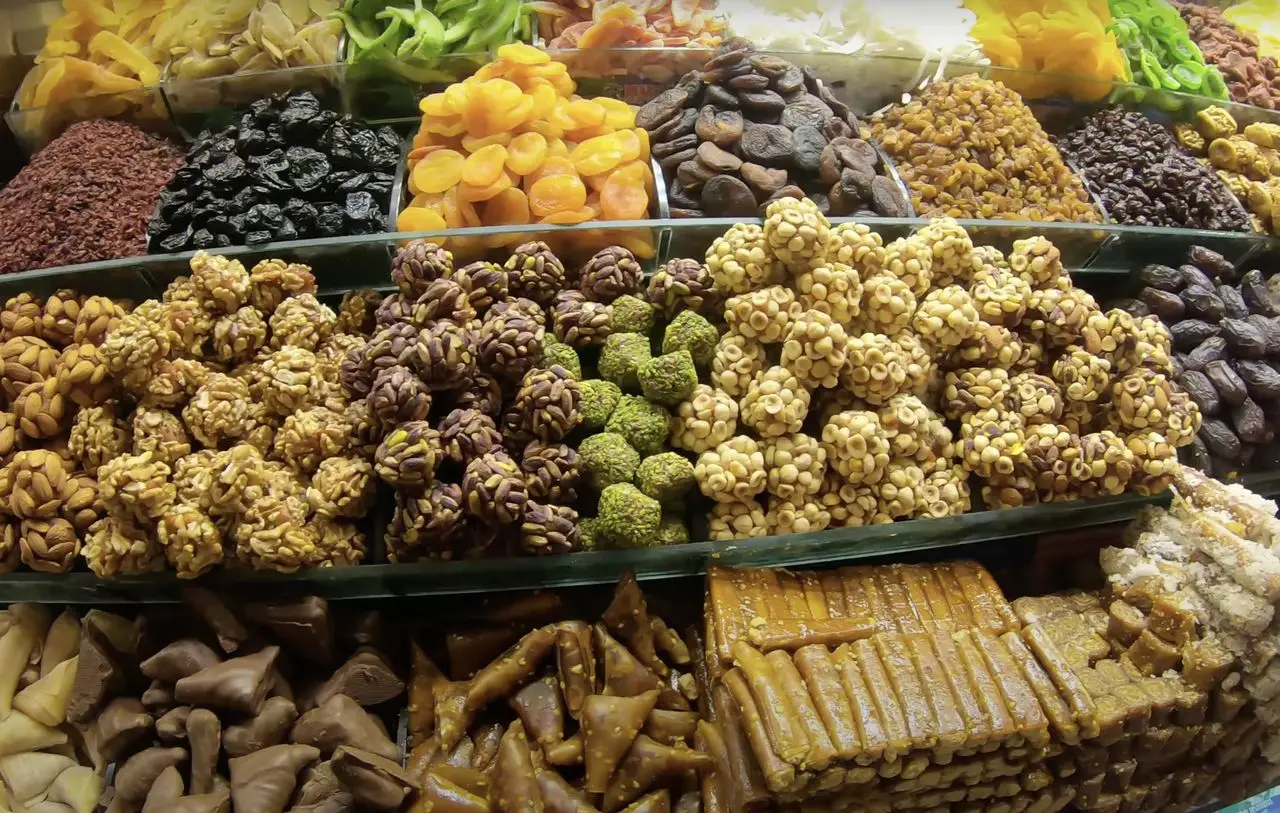
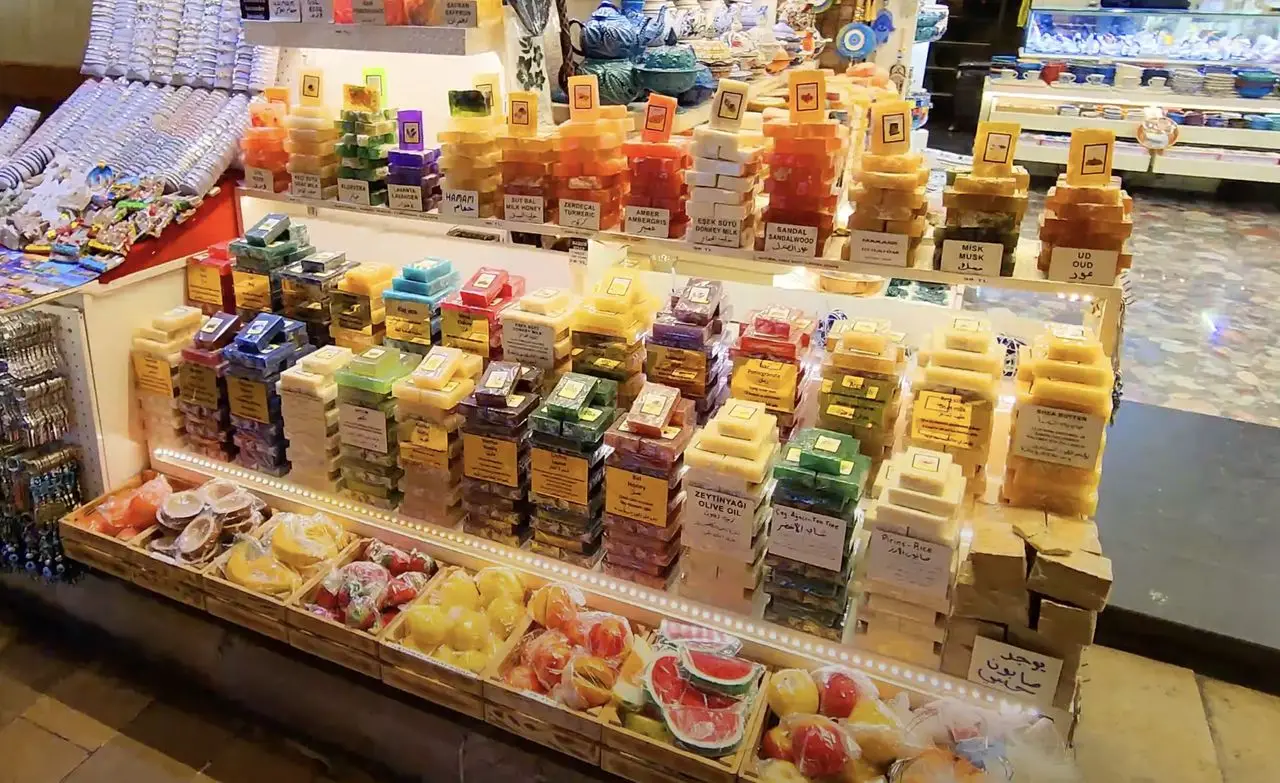
Today, the Spice Bazaar remains a bustling marketplace, attracting locals and tourists. It offers a wide range of goods: spices, Turkish delight (lokum), dried herbs, nuts, teas, honey, and dried fruits. The market is a must-visit for those looking for authentic Turkish flavors.
🚗 First Time in Istanbul? Be Prepared & Carefree!
Istanbul: Private Airport Transfer with Meet and Greet 🌟 4.4 / 5 (318 reviews)
Bosphorus Dinner Cruise & Show with Private Table 🌟 4.8 / 5 (29936 reviews)
Istanbul: Full-Day Highlights Tour with Guide and Lunch 🌟 4.5 / 5 (1101 reviews)
What to Buy in Spice Bazaar
When wandering through the Spice Bazaar, you’ll find shops filled with spices, Turkish delights (lokum), tea blends, dried fruits, and nuts. Many of the shops have been family-run for generations, with the craft and knowledge passed down over time.
- Turkish Delight (Lokum): One of the most popular products in the bazaar, Turkish delight comes in many flavors, including pomegranate, rose petals, orange, and chocolate-covered varieties. Historically, the recipe was kept a secret by the Ottomans, adding to its allure. Today, you can sample different types and learn about the centuries-old production methods.
- Tea Mixtures: The bazaar is known for its variety of tea blends, from pomegranate flower tea to gold-love tea. Popular teas are mixed with fruits and flowers, offering a rich sensory experience in both taste and aroma.
- Pomegranate and Other Specialties: Pomegranate is a symbol of abundance in Turkey, and you’ll see it everywhere—both in its fruit form and as an ingredient in teas and sauces.
- Spices and Dried Herbs: The heart of the bazaar lies in its spice trade. The fragrant aroma of dried herbs, pepper, sumac, and saffron fills the air. Each spice brings a piece of the region’s history and culinary traditions.
- Caviar and Other Delicacies: You can find unique and high-end products like Iranian caviar in the market. Other gourmet options include aged goat cheese, pastrami (pastırma), and a range of olives and pickles.
- Turkish Pastrami (Pastırma): Made from beef seasoned with a mixture of seven spices, Turkish pastrami has a rich flavor and is an iconic product in the bazaar. The word “pastrami” itself is believed to have Turkish origins, deriving from “basturma,” which means “pressed meat.”
- Dried Vegetables for Cooking: Dried eggplants, peppers, okras, and zucchinis are strung together and sold in bundles. These vegetables are often stuffed with rice or meat, showcasing the Turkish tradition of preserving and flavoring seasonal produce for year-round use.

Don’t Miss The Best Tours and Cruises in Istanbul
Turkish Tea & Street Food
The Turkish tea (çay) culture is deeply ingrained in daily life. You’ll often see vendors carrying trays of small tea glasses through the bazaar. Locals drink around 10 cups a day, and tea is more than a beverage—it’s a social ritual. The tea sold in the bazaar comes from the Black Sea region and is typically brewed using a double teapot, allowing for a robust flavor.
Outside the Spice Bazaar, you’ll find stalls selling simit (a sesame-crusted pretzel-like bread), chestnuts, and roasted corn. Simit is an iconic Turkish snack, often eaten on the go and paired with tea.
Architecture and Layout of Space Bazaar
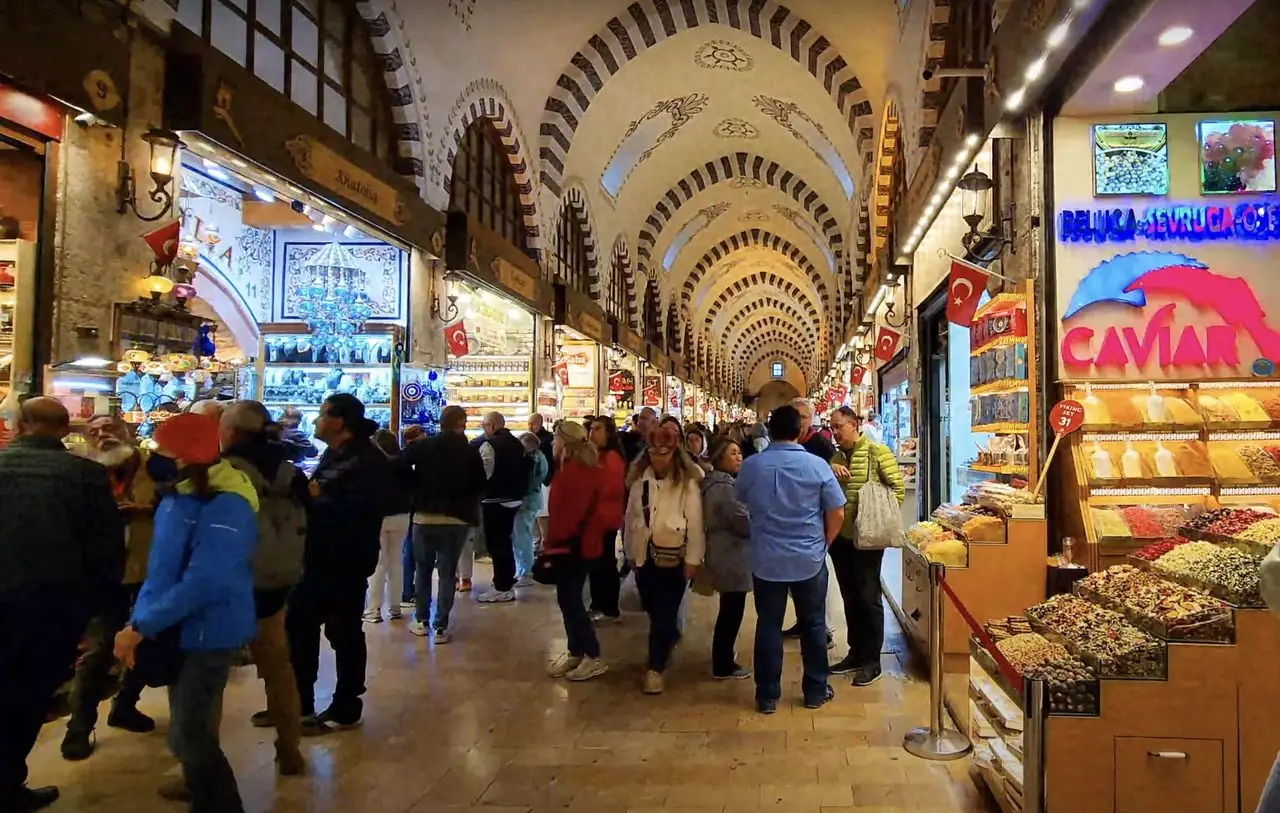
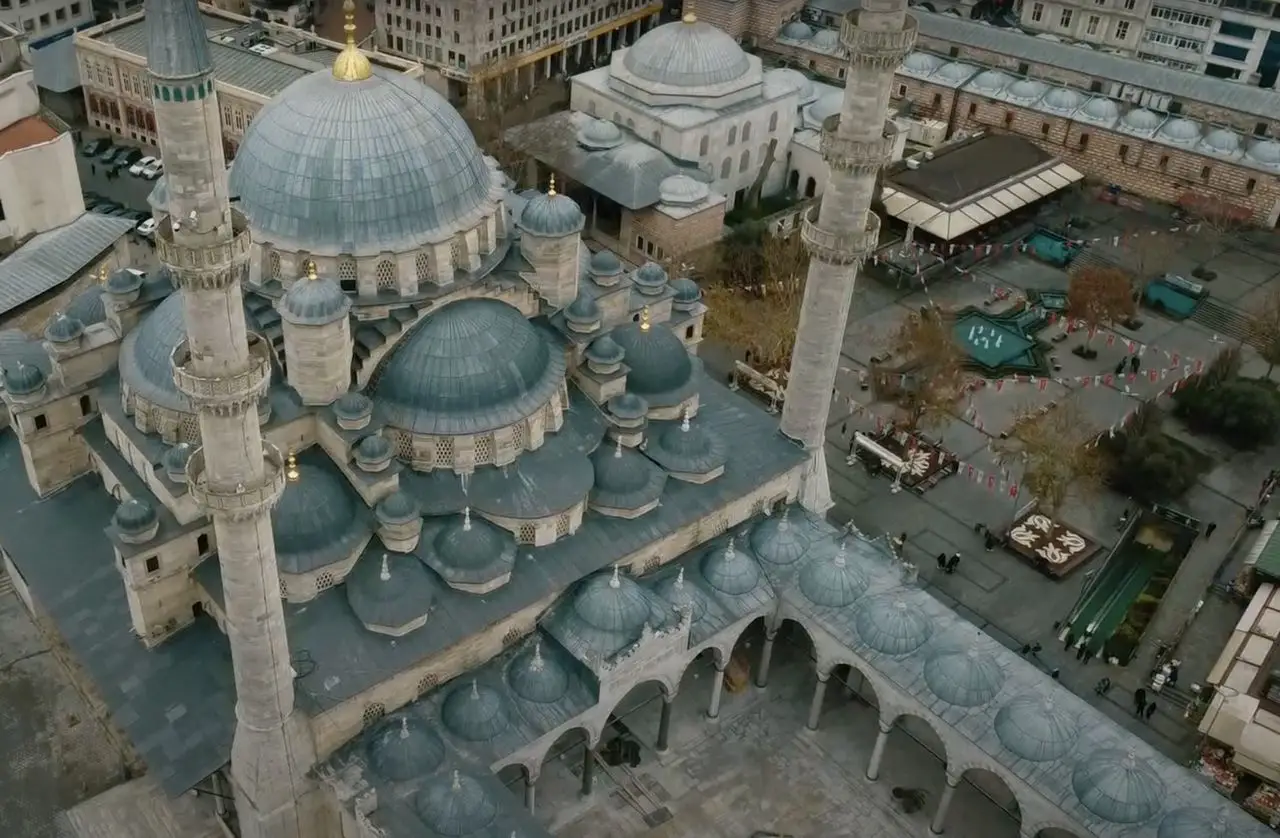
The Spice Bazaar stands as a notable example of classical Ottoman architecture, blending commercial functions with social and religious purposes. This type of covered market, traditionally part of a larger complex, was designed to support adjacent structures such as a mosque, madrasah (religious school), and hospice, with the revenues from the bazaar shops used for their upkeep.
The Spice Bazaar area offers more than just spices. Nearby, you’ll find the famous Mehmet Efendi coffee shop, a traditional Kourou Kahvedji Inn, and the historic restaurant Pandeli. Two of the most bustling streets are Hasırcılar and Kutucular, where you can find almost anything. Also worth a visit is the Rüstem Pasha Mosque, known for its beautiful İznik tiles.
Key Architectural Features
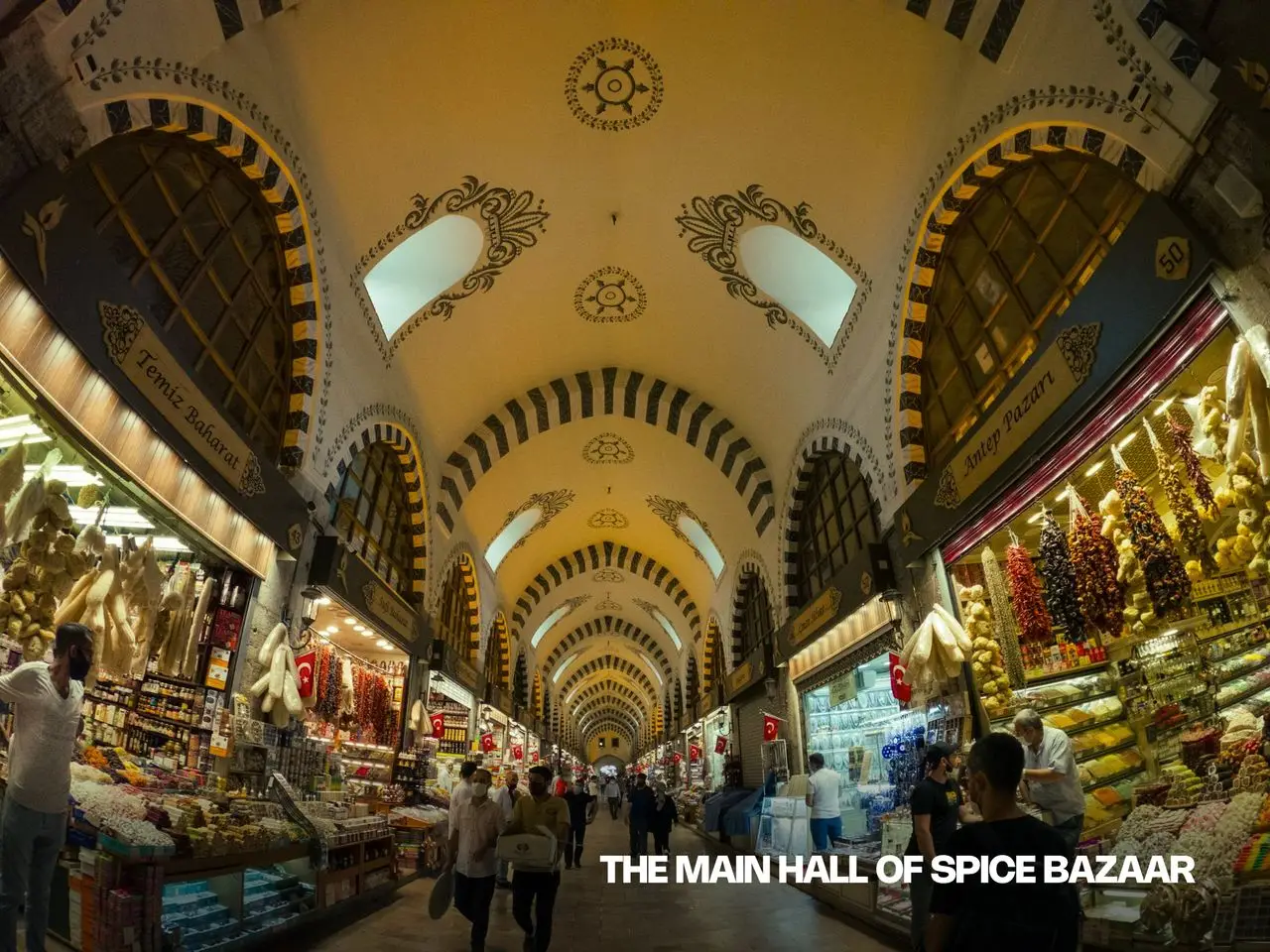
- Main Entrance & Design: The main entrance is beautifully adorned with Ottoman calligraphy and detailed tilework, offering an impressive introduction to visitors. The interior layout is centered around two main intersecting streets, forming an L-shape. This symmetrical arrangement makes navigation easy, providing a logical and orderly experience for visitors exploring the various shops.
- Classic Ottoman Style: The Spice Bazaar is built in a classic Ottoman style, marked by its rectangular layout, domed roof, and vaulted ceilings. The bazaar consists of 88 vaulted rooms, creating a spacious and airy interior, and is connected by six gates.
What’s Nearby?
- Yeni Mosque (New Mosque): The nearby New Mosque is an architectural companion to the bazaar. Built in the same era, it served as the financial backbone for maintaining the market.
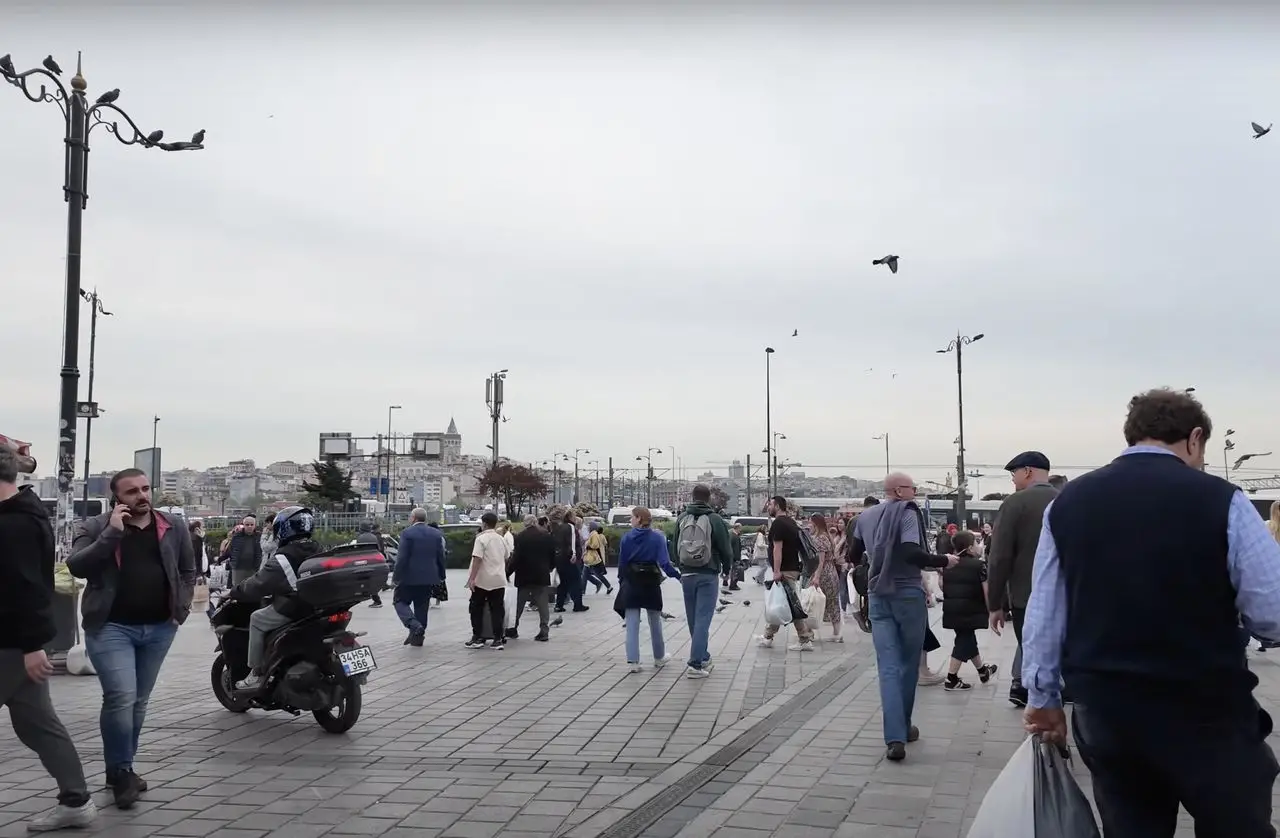
- Eminönü Square: A lively square bustling with street vendors selling a variety of local foods. Enjoy a freshly baked simit, a Turkish sesame-covered bread, or try a fish sandwich (balık ekmek), a local favorite.
- Galata Bridge: A short walk from the bazaar, this historic bridge stretches over the Golden Horn. It offers picturesque views of both the old and new sides of Istanbul, with the added bonus of local anglers fishing along the edge.
- Grand Bazaar: A few minutes away is one of the world’s largest and oldest covered markets—the Grand Bazaar.
- Süleymaniye Mosque: Close to the Spice Bazaar, this mosque is a stunning example of classical Ottoman architecture. Its elevated location provides breathtaking views of the city and the Bosphorus.
Opening Hours of the Spice Bazaar
The Spice Bazaar is open every day from 9:00 AM to 7:30 PM in 2025.
Unlike the Grand Bazaar, which is closed on Sundays, the Spice Bazaar remains open throughout the week, making it a convenient destination for shopping.
However, it is closed on religious holidays like Eid al-Fitr (Ramadan Feast) and Eid al-Adha (Sacrifice Feast).
Practical Tips for Visiting the Spice Bazaar
- Barter Smartly: While shopping, haggling is common. However, many vendors provide fixed prices for items like spices, teas, and sweets.
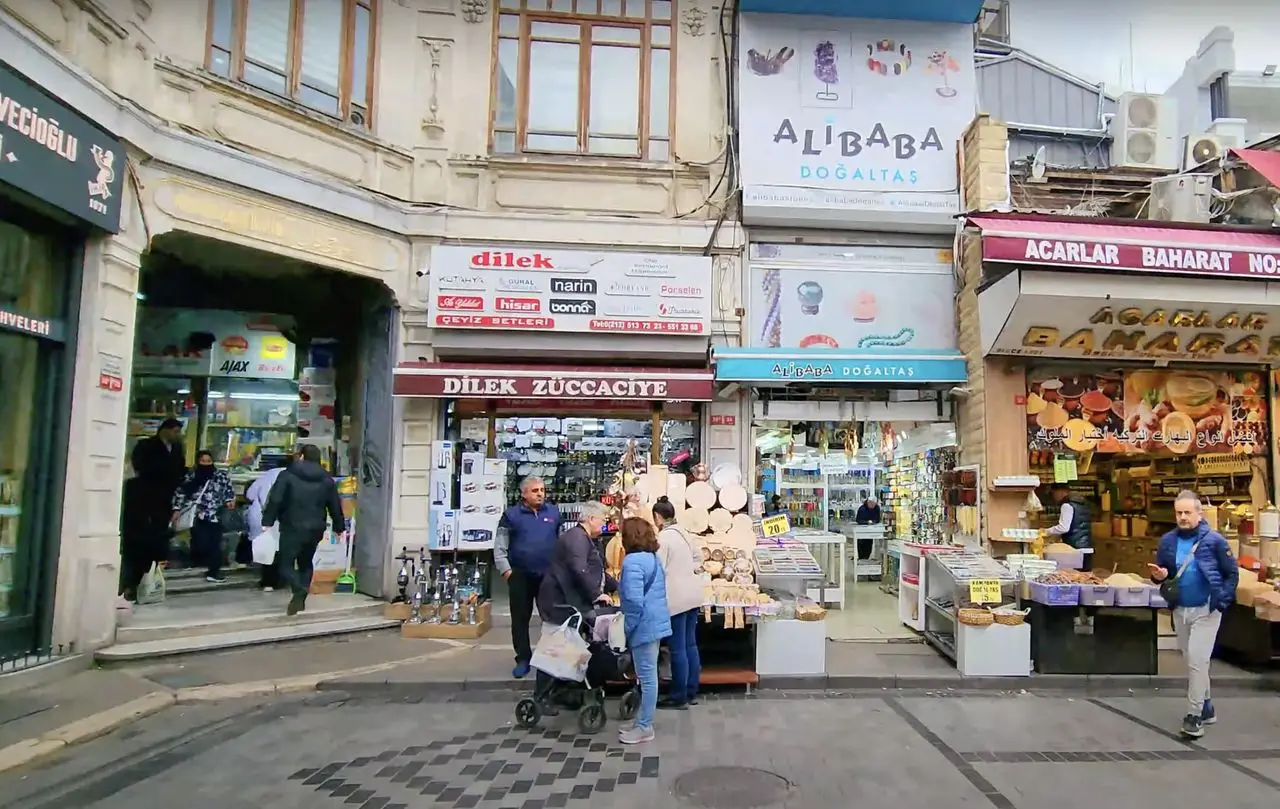
- Shopping Tip: The Spice Bazaar pavilion is great for browsing, but you’ll find better prices on the streets and stalls just outside the main building. The further from the historic pavilion, the cheaper the items tend to be.
- Safety Tip: Keep a close eye on your bags and belongings, as the bazaar can be crowded—a prime spot for pickpockets.
- Try Before You Buy: Most shops offer samples of Turkish delight, teas, and spices. Don’t hesitate to try different varieties to find your favorite flavors.
- Opening Hours: The Spice Bazaar is usually open from 9 am to 7:30 pm every day except public holidays.
- Plan a Stop for Tea or Coffee: Many shops serve traditional Turkish tea, and some offer fresh coffee ground on the spot. Taking a break for tea is an integral part of the bazaar experience.
Navigation
Where is the Spice Bazaar: Getting There
Rüstem Paşa, 34116 Fatih/İstanbul, Türkiye
Find on Maps
Use the Marmaray lines (Ataköy-Pendik or Halkalı-Gebze) from Asian Side / Kadikoy.
The nearest train station is Sirkeci, about a 8-minute walk from Spice Bazaar.
Use the M2 Yenikapı-Hacıosman metro line. You can either:
Transfer to the T1 tram line at Şişhane and head to Eminönü.
Or walk around 15 minutes from the Vezneciler station.
Take the T1 Kabataş-Bağcılar tram line and get off at the Eminönü stop. From there, it’s a short walk to the Spice Bazaar, as it is located right across the street from the tram station.
For those coming from the Asian side of Istanbul, the easiest route is to take a ferry to the Eminönü terminal. The Spice Bazaar is just a few minutes’ walk away from the ferry port.
FAQs about the Spice Bazaar in Istanbul
Don’t Miss The Best Tours and Cruises in Istanbul
Old City Route – Istanbul
$9.99
★★★★★
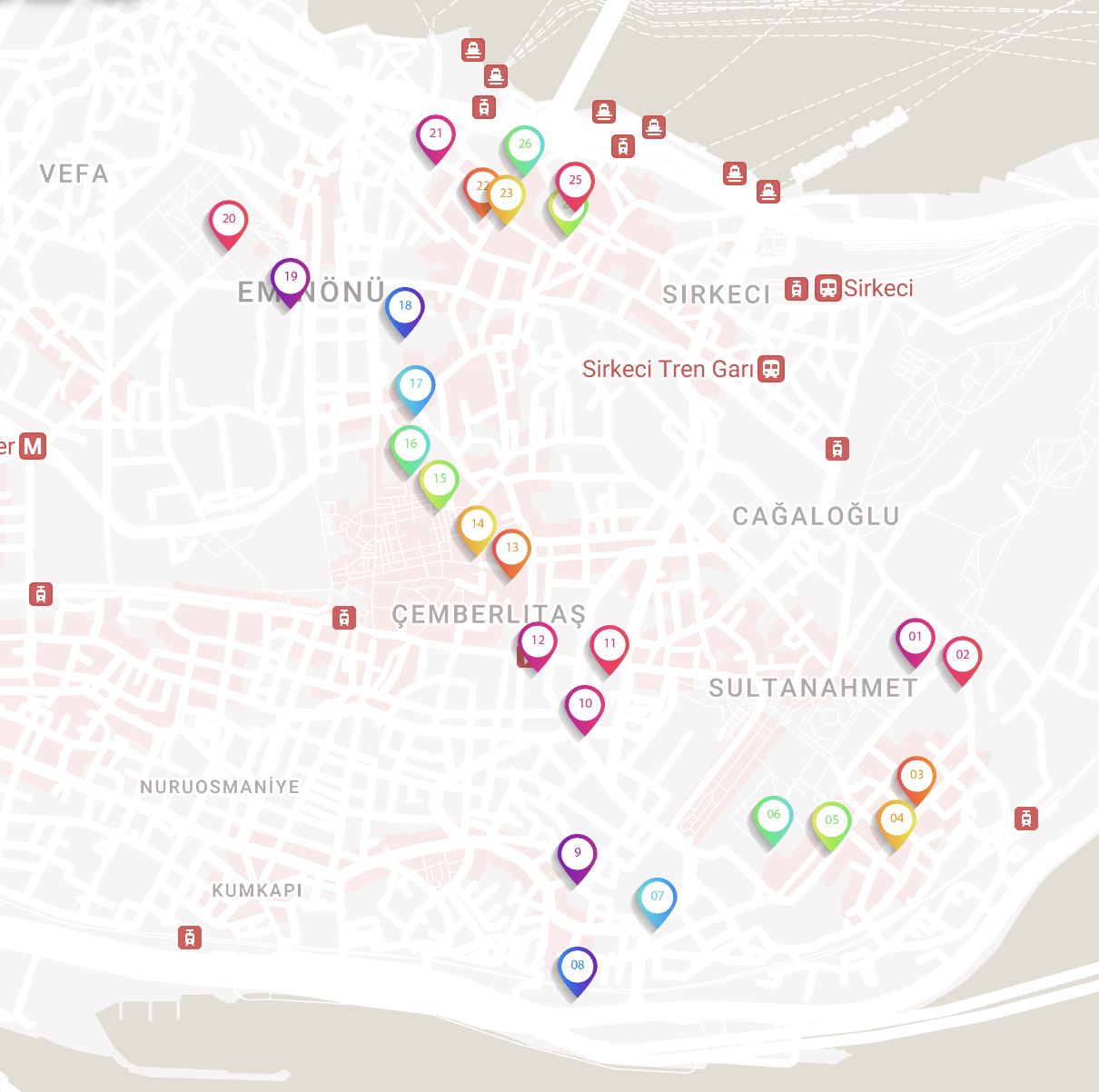
A step-by-step guide to uncovering Istanbul’s hidden gems beyond Sultanahmet. Access the route via Google Maps and a handy PDF guide
Similar Posts
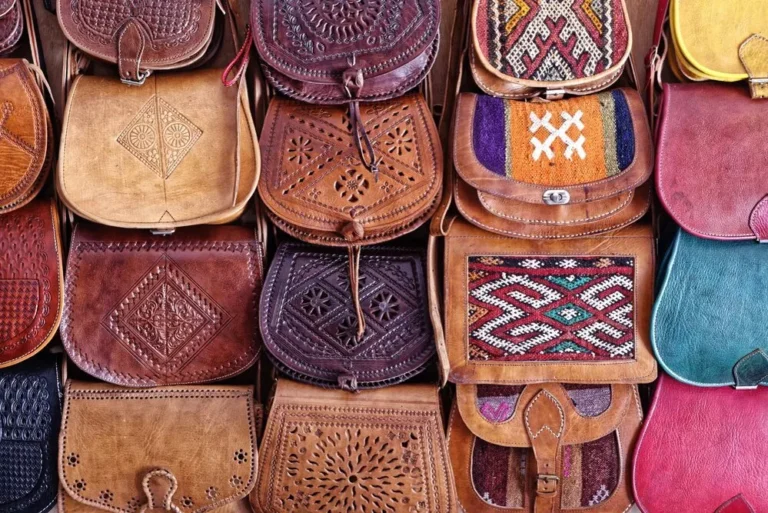
Handmade Brands and Shops to Discover in Istanbul: 2025 Guide
Save up to 70% with Istanbul E-Pass Pay Once and Have Free Attractions Entry for 7 days Save over 50% Unveiling the hidden gems of Istanbul’s thriving handmade scene, this comprehensive guide takes you on a journey through the city’s most beloved artisanal brands and shops. Experience the magic of local craftsmanship as you delve…
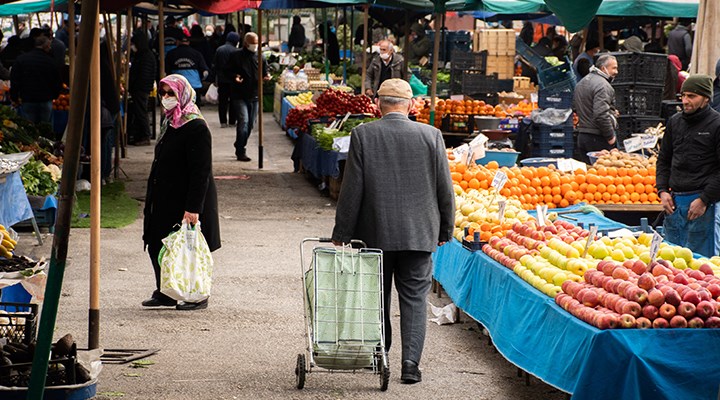
Shopping & Bargaining in Turkey: Your Ultimate Guide to Haggling like a Pro
Save up to 70% with Istanbul E-Pass Pay Once and Have Free Attractions Entry for 7 days Save over 50% Are you planning a trip to Turkey and want to experience the thrill of shopping in the bustling markets and bazaars? Shopping in Turkey can be an adventure, especially when it comes to bargaining. Haggling,…
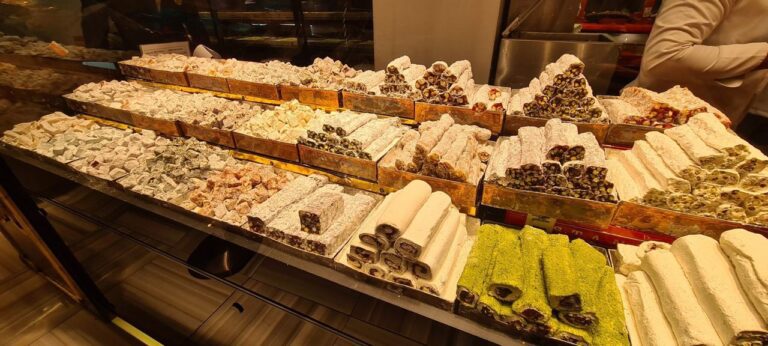
Where to Buy Turkish Delight in Istanbul: 15 Best Shops with Lokum
Save up to 70% with Istanbul E-Pass Pay Once and Have Free Attractions Entry for 7 days Save over 50% Istanbul, a city rich in culture, history, and gastronomy, offers a delightful experience for any traveler. One such iconic delight is the “lokum” or Turkish delight, a centuries-old treat that has captivated taste buds across…

Where to Find Best Turkish Coffee in Istanbul: 13 Coffee Shops (2025)
Save up to 70% with Istanbul E-Pass Pay Once and Have Free Attractions Entry for 7 days Save over 50% Turkish coffee, also known as Eastern coffee, is made from high-quality Arabica beans. Interestingly, these beans don’t originate from Turkey but come from Central America, Brazil, and Ethiopia. They undergo a meticulous process of sorting,…
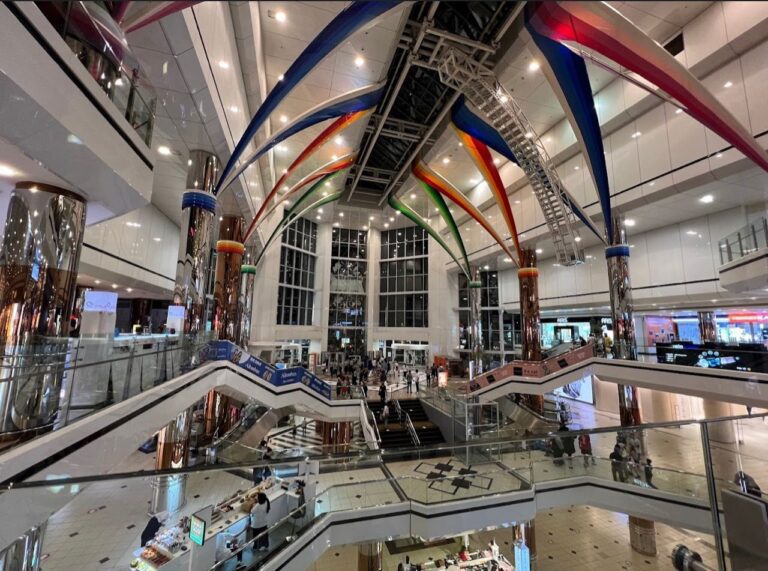
Cevahir Shopping Mall in Istanbul: Shops, Restaurants, Working Hours, and Sales (2025)
Save up to 70% with Istanbul E-Pass Pay Once and Have Free Attractions Entry for 7 days Save over 50% Istanbul Cevahir, also known as Jawaher Mall, is the ultimate destination for shopping, dining, and entertainment in Turkey’s bustling city of Istanbul. This extensive guide will provide you with all the information you need to…
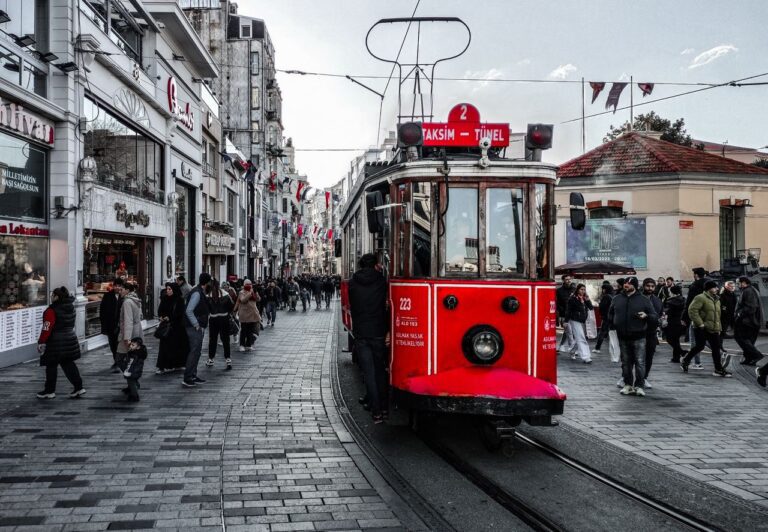
Istanbul on Foot: A Pedestrian’s Guide to Walk the City’s Streets
Save up to 70% with Istanbul E-Pass Pay Once and Have Free Attractions Entry for 7 days Save over 50% Istanbul, the magical city where East meets West, has a rich history that spans thousands of years. The city’s vibrant streets and alleys showcase its unique blend of cultures, making it a must-see destination for…
I was at the Spice Bazaar on the 11 and 12 of October, I purchased a lot of dired Fruites and i paid for it, I am back home and still did not receive the Goods.
is ther anyone that i can get in touch with to check when my shipment is going to get here.
this is the name that poted up in my credit Card (FURKAN YILDIZ ISTANBUL TR)